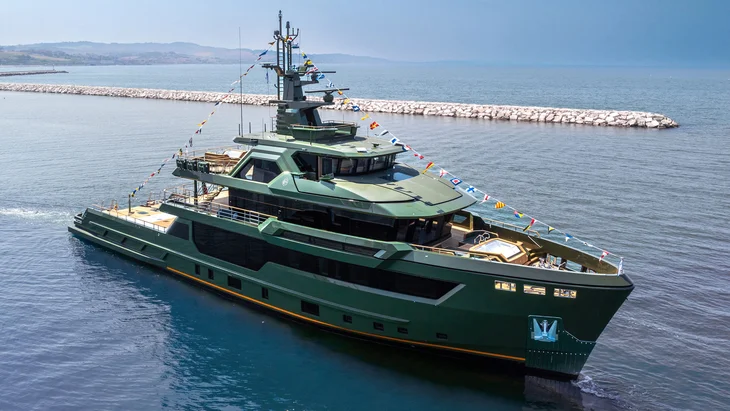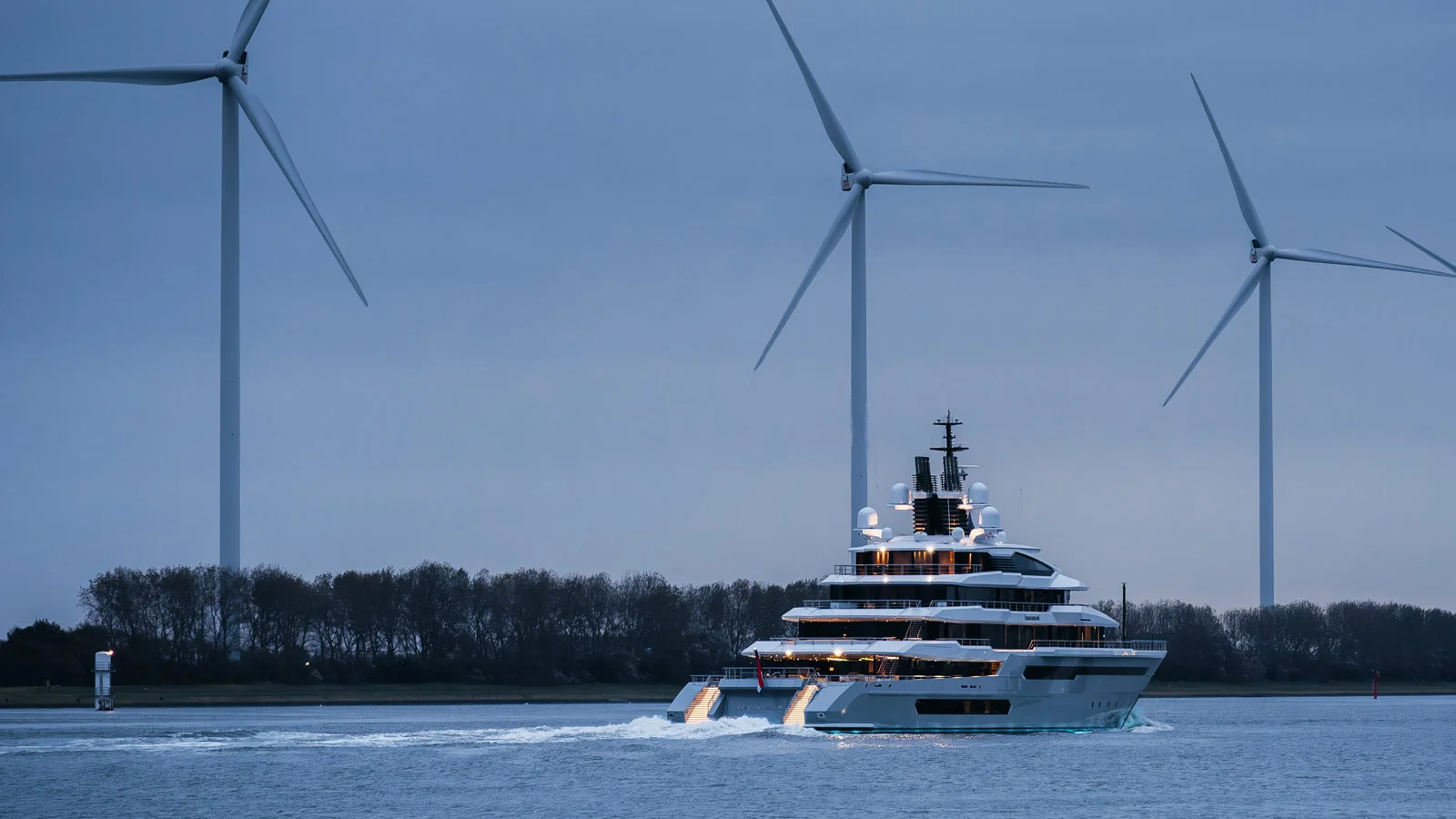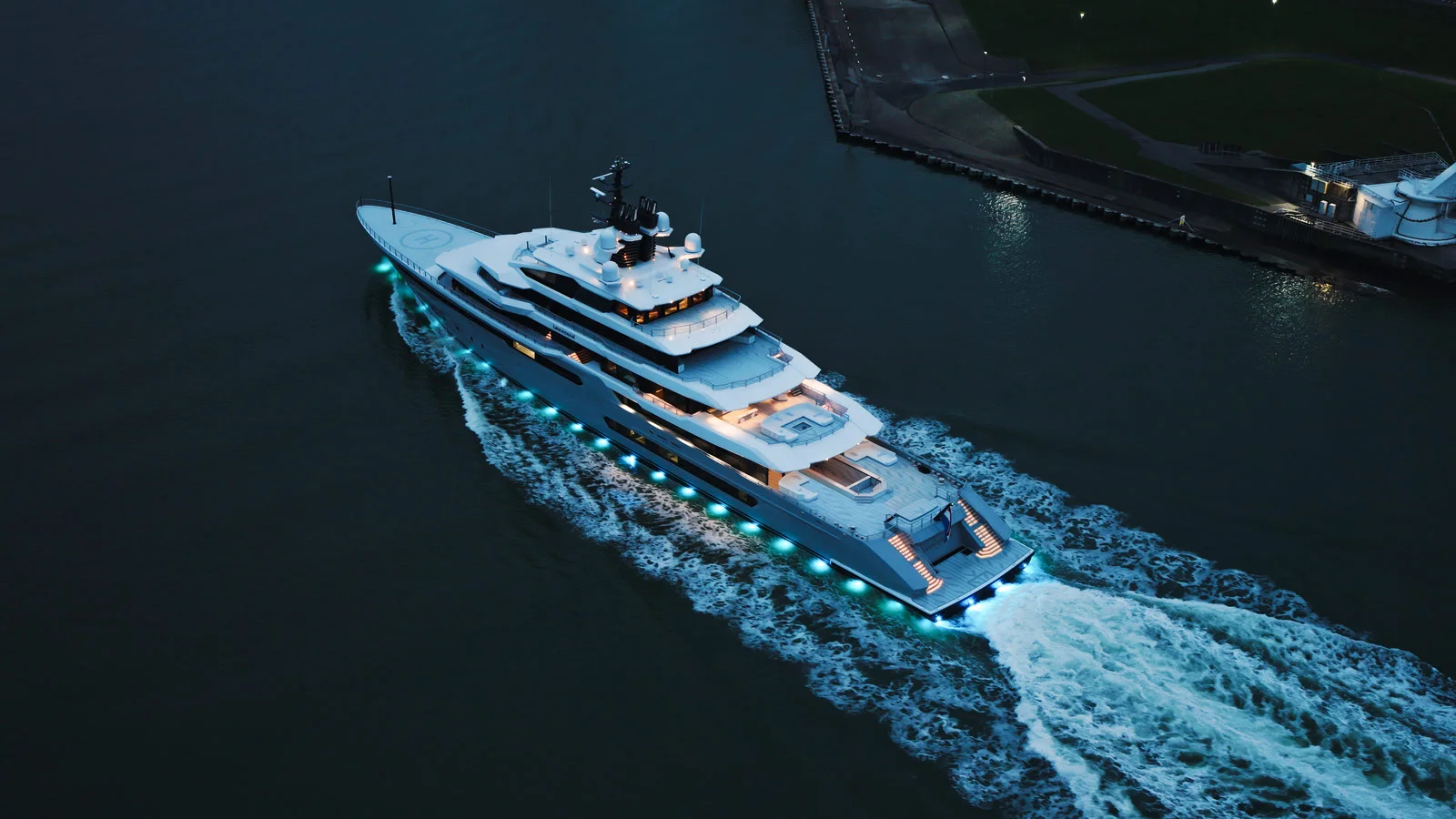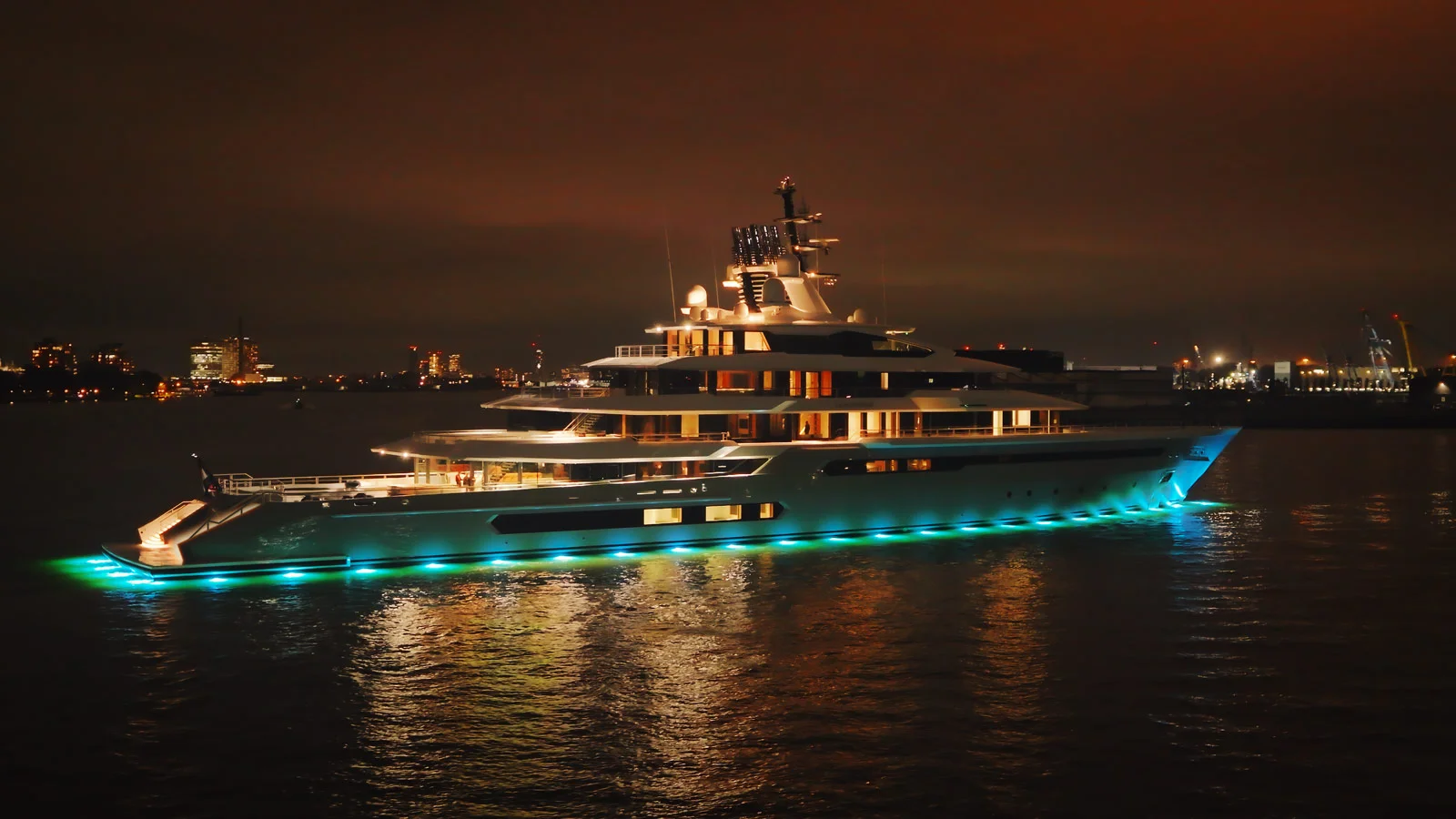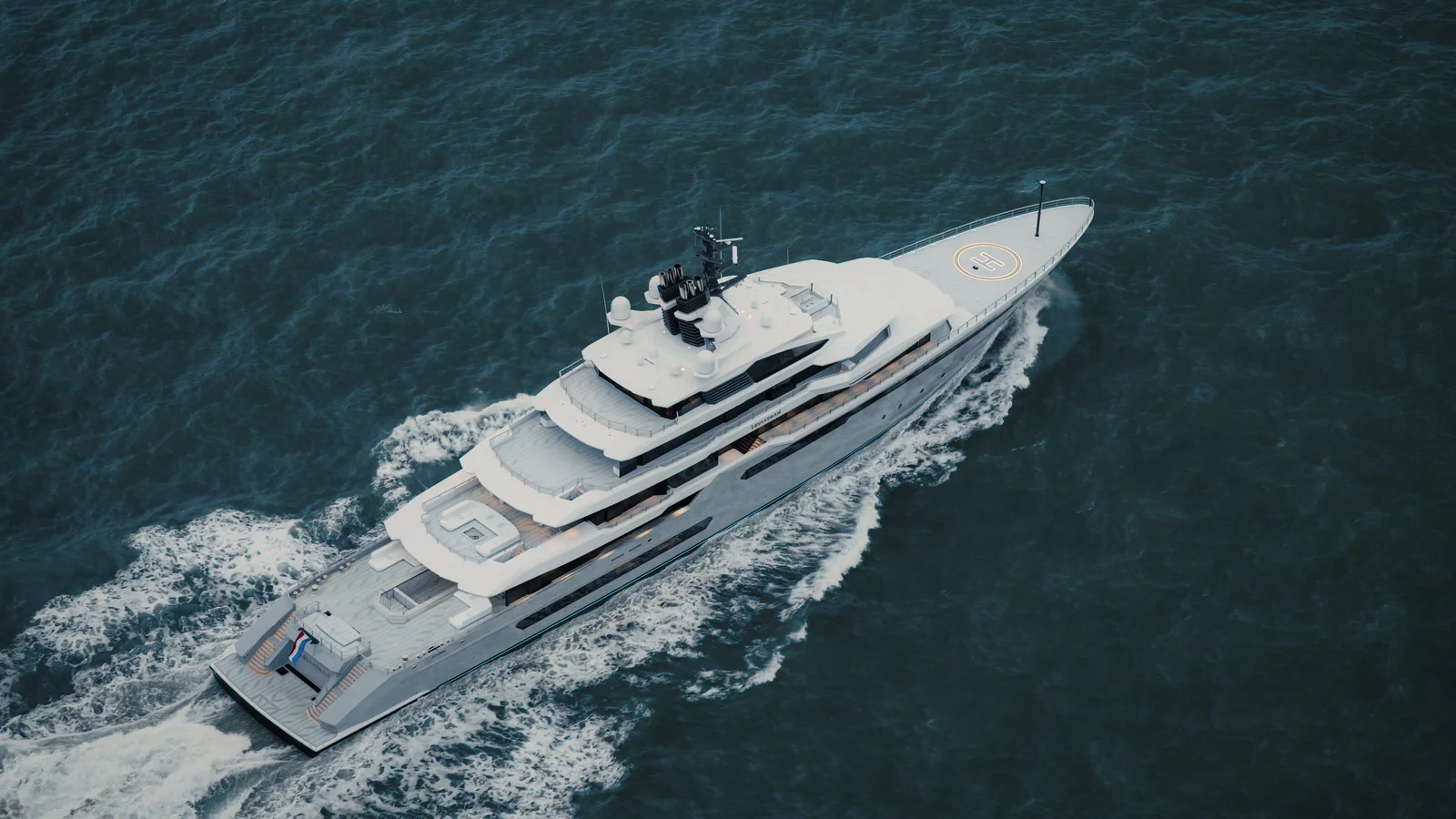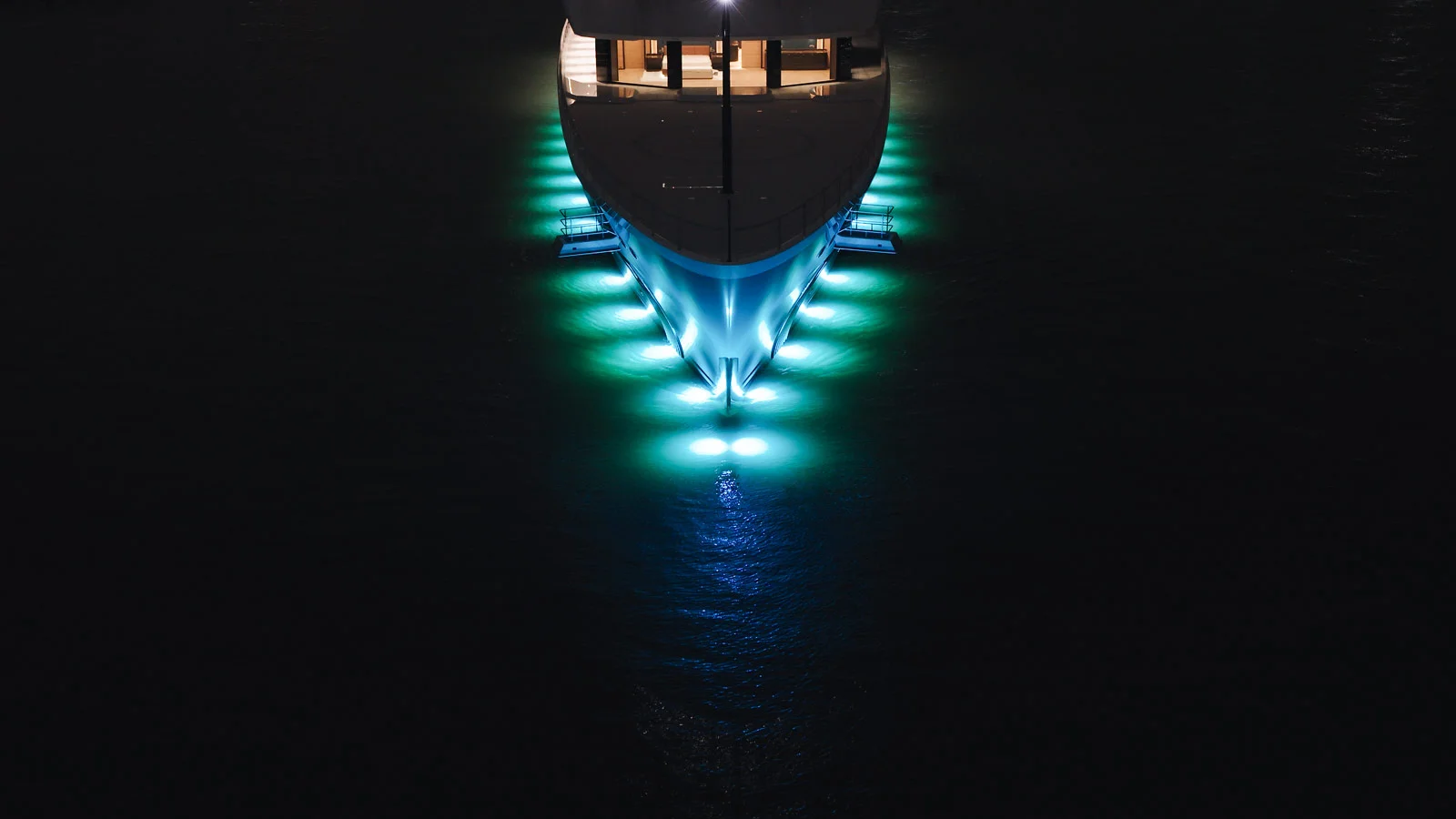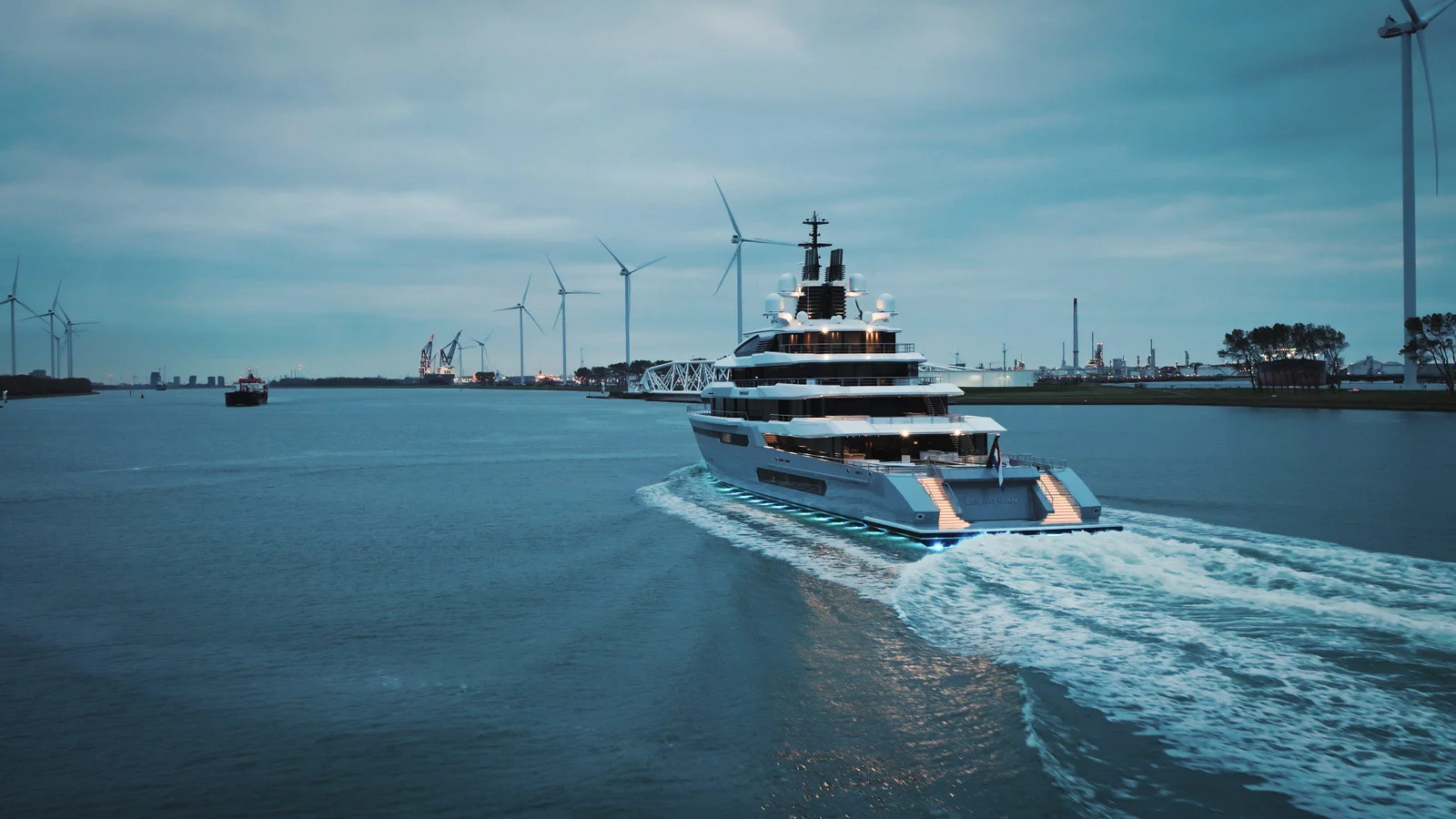
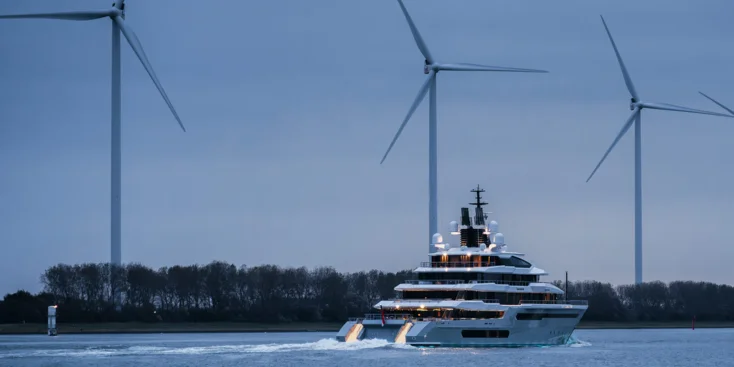
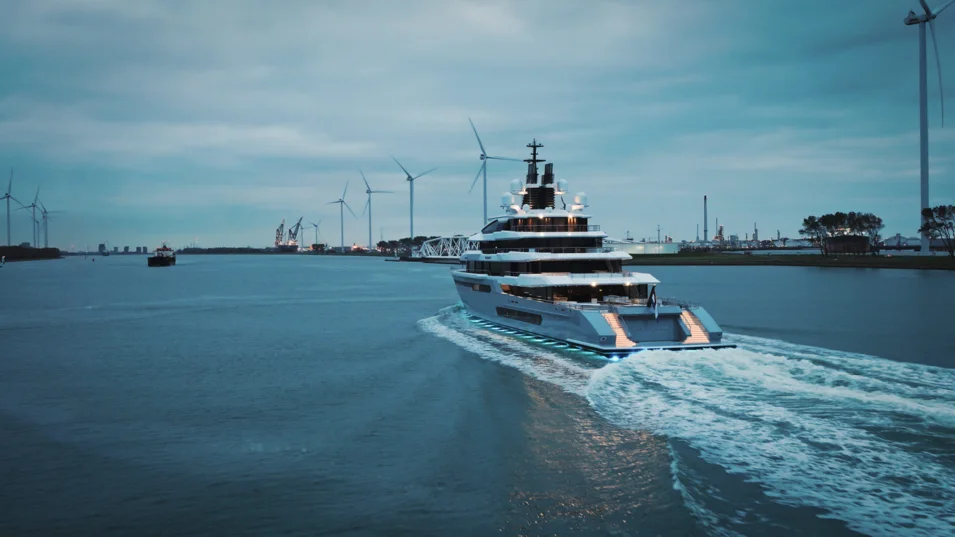
According to the shipyard, the Leviathan represents a new philosophy of yachting: one that places greater purpose on how yachts are built, operated and owned
It is no longer a secret that the Leviathan was commissioned by Gabe Newell, who recently became the owner of Oceanco, so the attitude to the project had been special from the start. It didn’t just have to be a breakthrough, but to showcase a new stage in the Dutch yard’s history, under a new, insightful helmsman.
Thanks to Newell’s focus on team work, there appeared a revolutionary layout and highly ergonomic design. Oceanco decided to work on the superyacht’s exterior in-house. It entrusted naval architecture to Lateral Naval Architects, while the combination of testing the hull and optimising the technical platform’s configuration allowed for lower level of noise and vibration on board.
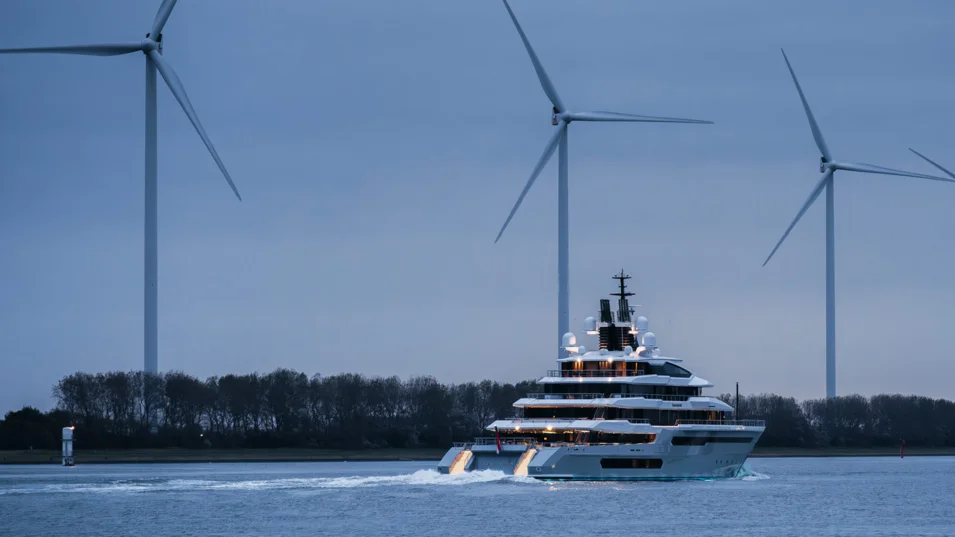
“From the very start, we knew nothing about her would be done in a traditional way. We were welcomed into the team alongside Gabe and everyone who would ultimately be involved in operating her. It is this level of collaboration that sets Leviathan apart from anything we’ve built before. We’re incredibly proud of the way she was developed, and following her successful sea trials, we can now say she’s the most comfortable yacht ever designed, built, and delivered by Oceanco,” shared Oceanco CEO Marcel Onkenhout.
“Working with the team at Oceanco is incredibly enjoyable and a lot of fun; everybody is professional, creative and dynamic. We knew we were asking for unusual things, and Oceanco embraced it with open arms. Not only have we designed a very unusual yacht that leans into Oceanco’s strengths of innovation and design, but the team has also been willing to collaborate with us on evolving the process,” said the Leviathan’s owner, Gabe Newell.
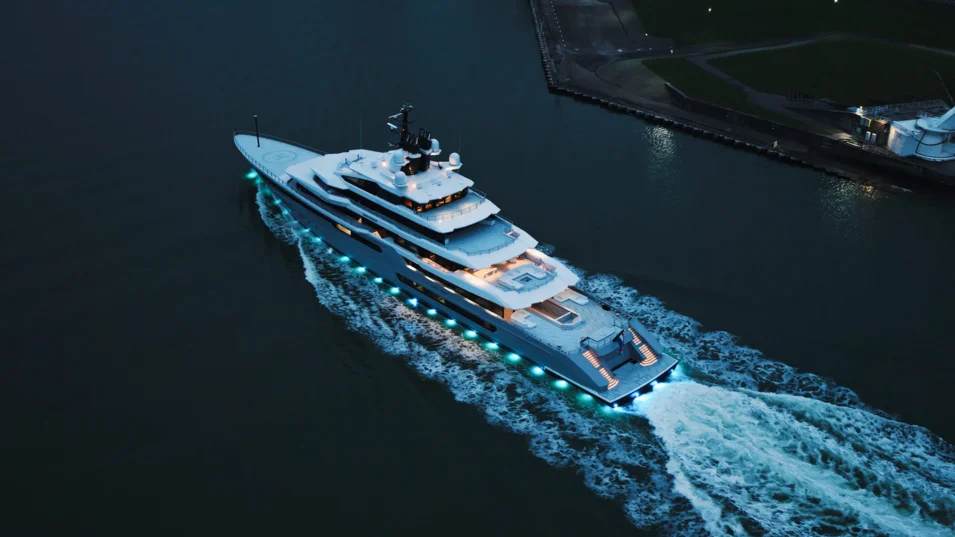
The joint efforts of the project team were commemorated on a glass panel installed in the central staircase, where the names of nearly 3,000 contributors are engraved.
The interior of the superyacht capable of accommodating up to 26 guests and 37 crew members was entrusted to Mark Berryman Design. The volume of 4,970 GT is definitely impressive, but not as much as the fact that as opposed to other vessels of her size, the Leviathan is meant to unite guests and the crew, enabling enjoyable common experience.
Most of the common spaces usually designated for guests have been reimagined to welcome the crew and to reflect the owner’s belief that a yacht should feel like a community.
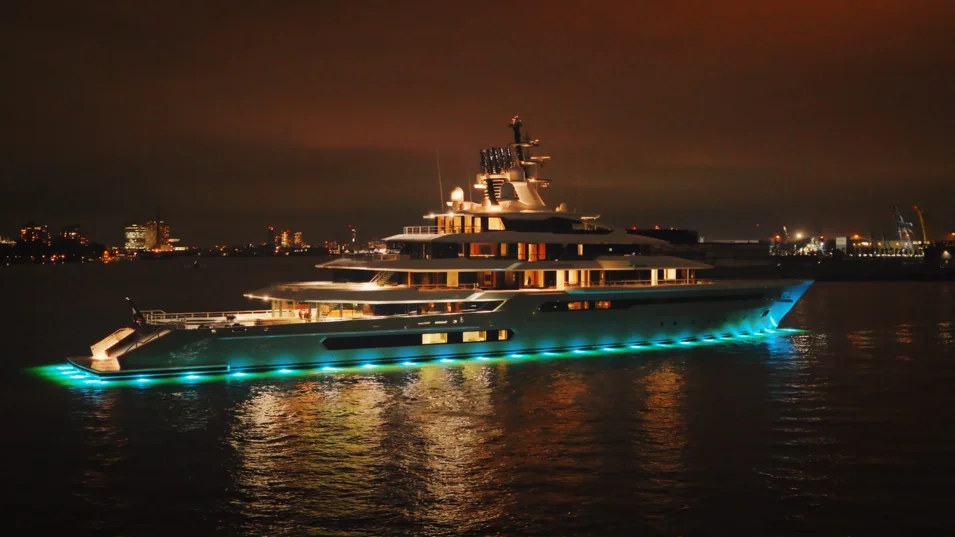
Thus, on the bridge deck, where an aft saloon might typically be located, there is a communal gaming lounge, accommodating 15 gaming stations, two race simulators and ample lounge seating. It can also be used as a quiet space for crew training and development.
The main deck saloon has been transformed into a spacious dining area for up to 54 people. Leisure areas are available for everyone, too, including a basketball court and recreational sun deck with whirlpool.
As for the crew accommodation, there was no goal to economise here either: its finishes feature oak and deep wenge.
“With 28 years of experience designing superyacht interiors, we’ve encountered nearly every possible scenario – or so we thought. Leviathan challenged convention in a completely new and exciting way from an operational standpoint,” said interior designer Mark Berryman, who had to deal not only with the owner’s requests, but the crew’s, too.
And they are not just words. Thus, for example, the materials chosen for the Leviathan are easy to maintain, but do not look cheap. Gable wants the crew to spend less time on routine tasks and focus on more important things like interaction with the guests and self-development.
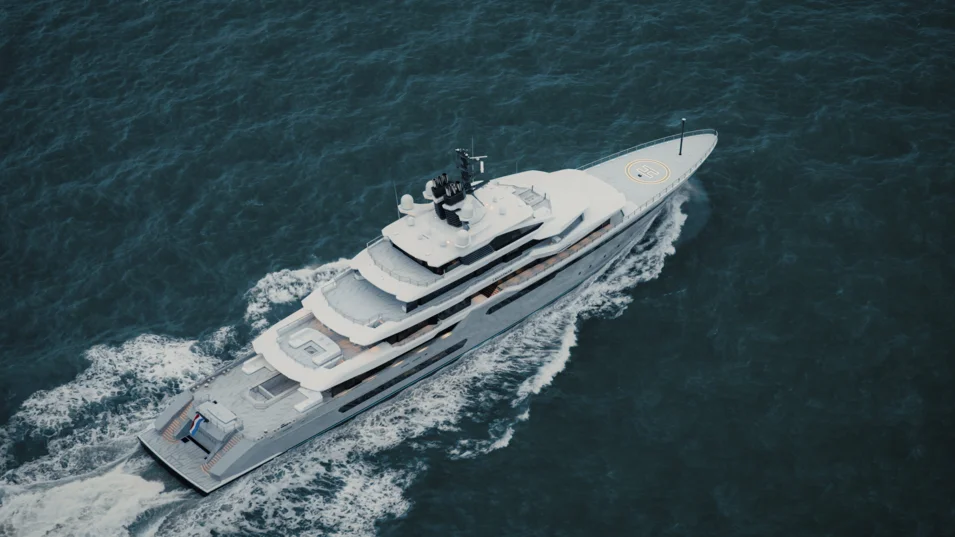
The decks are covered in a low-maintenance synthetic material, Bolitd, with a custom pattern inspired by the superyacht's exterior. The railings and handrails have been specially treated to minimize the need for polishing. The durability and ease of cleaning of leather and polished stone make them a popular choice for interior spaces, as are natural wool rugs for their durability and ease of care. Even the off-white exterior paintwork was selected to help minimize cleaning.
The hull of the superyacht is the latest evolution of Lateral’s DE-Series, designed for large yachts operating at moderate speeds with podded propulsion. Both at anchor and underway, with a natural roll period exceeding 12 seconds and a stabilization system combining Quantum MagLift and XT Fins, the Leviathan delivers superior onboard comfort across a wide range of operating conditions. To enhance performance, a seawater ballast system was incorporated, enabling the optimal loading conditions.
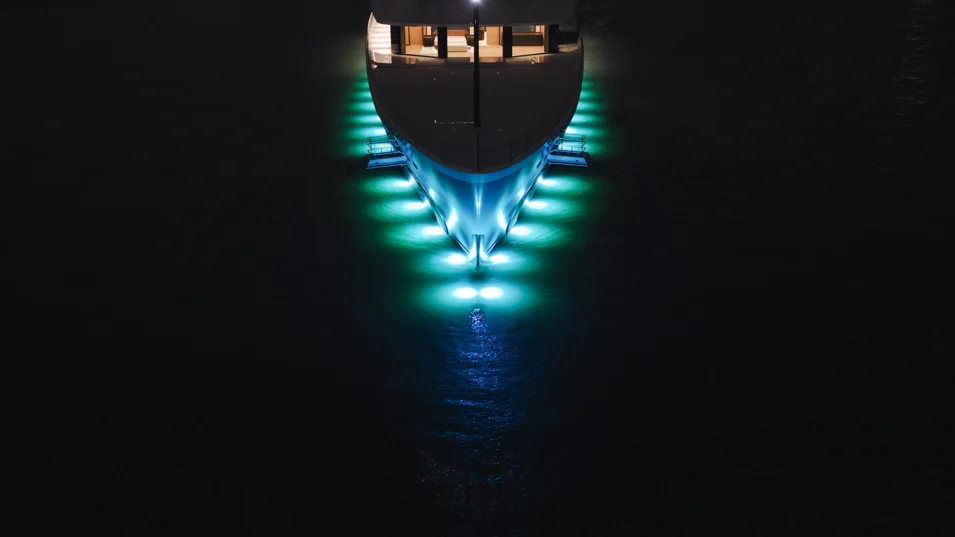
With a length of 111 m and a beam of 17.8 m, the Leviathan is fitted with ABB DO980P Azipods and custom-made five-blade propellers, thanks to which she can boast higher efficiency and incredibly low level of noise and vibration. The vessel’s provisional speed 17.6 knots, and the cruising speed is 13 knots.
The yacht’s 5.5 megawatt-hour battery system enables silent nighttime operation supports optimal engine performance, reducing engine running hours and extending maintenance intervals.

Thanks to the Leviathan’s diesel-electric drive, the engine room is positioned forward. It enabled more flexibility in layouts and more guest accommodation aft.
The shipyard has also paid a lot of attention to the acoustic comfort and advanced air filtration and monitoring… But what is probably most exciting about the Leviathan is that there is not plan to make her another billionaire’s superyacht cruising the Bahamas and the Mediterranean. She joins Inkfish fleet, an organization supporting scientific research and marine exploration.
On board the Leviathan there are facilities designed to accommodate that, including a fully equipped dive center, a laboratory and an onboard hospital, occupying the space traditionally reserved for a beach club. A 3D printing workshop will allow the crew to produce spare or replacement parts on board, which is important for extended or remote cruising.
“Yachts have great potential to serve as platforms for scientific research. It’s about recognizing that you’re part of a broader community and ensuring the yacht’s presence adds value to the communities around it,” said Gabe Newell.
The shipyard shares the owner’s values and believes the Leviathan will shape the future of the industry as a “symbol of how yachting can evolve through people, performance and purpose”.
You have successfully subscribed to our newsletter