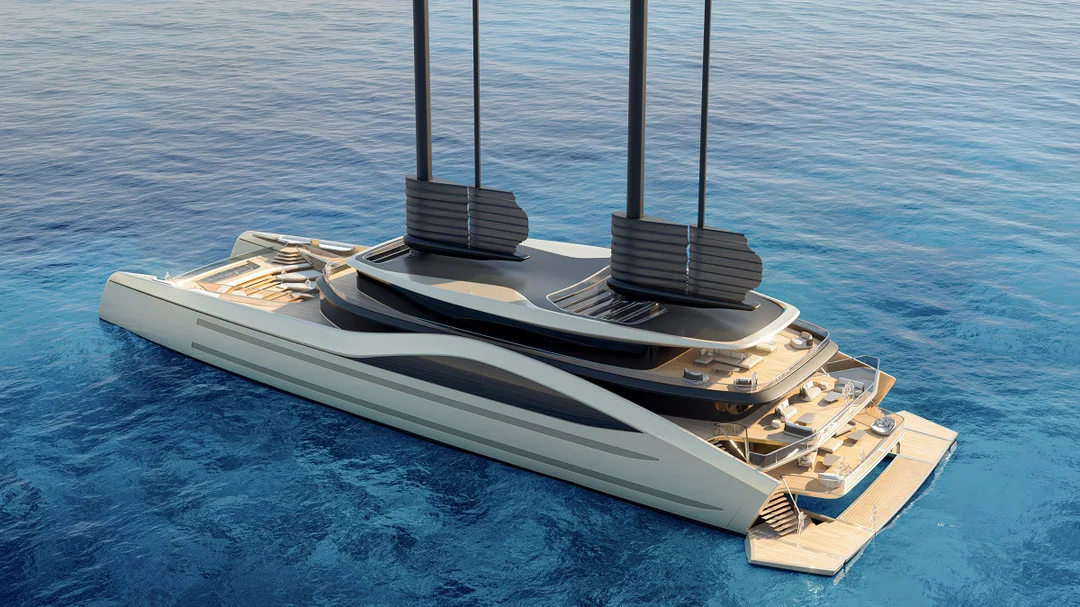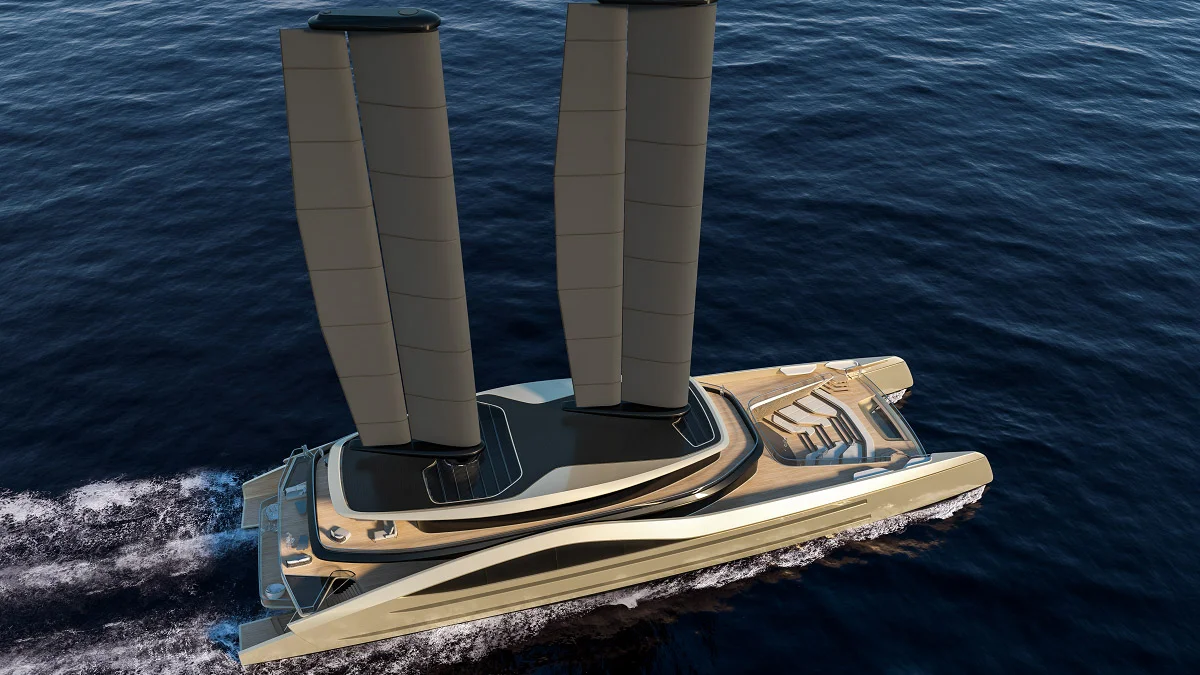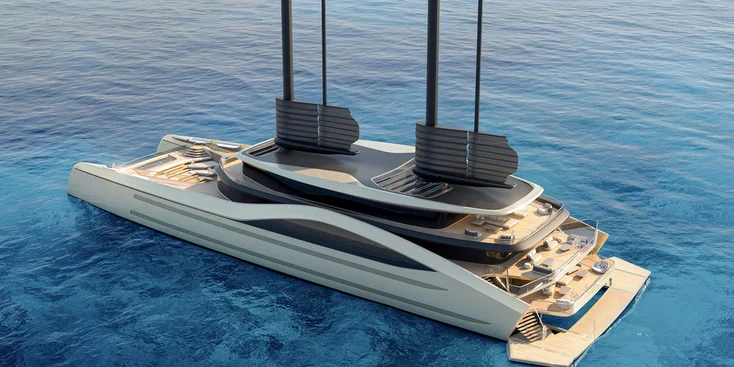
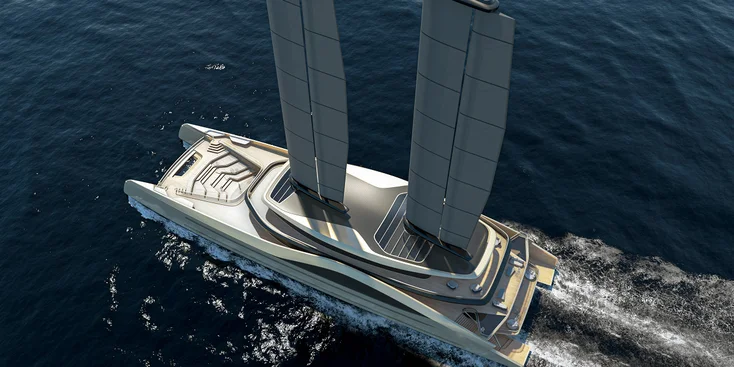
The project is aimed at the new generation of yacht owners who want the volume of a motor megayacht but strive for eco-consciousness and self-sufficiency
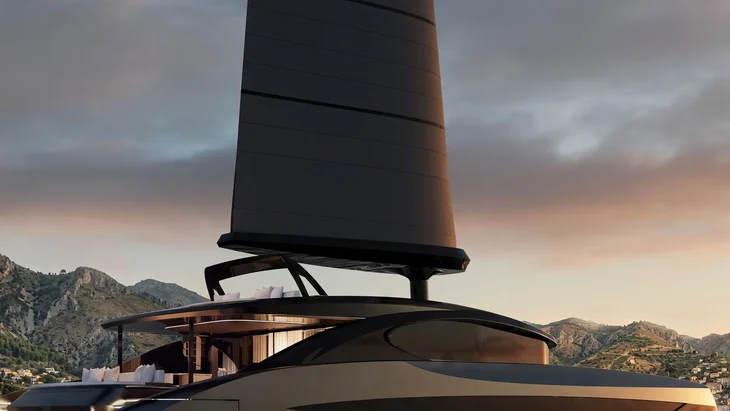
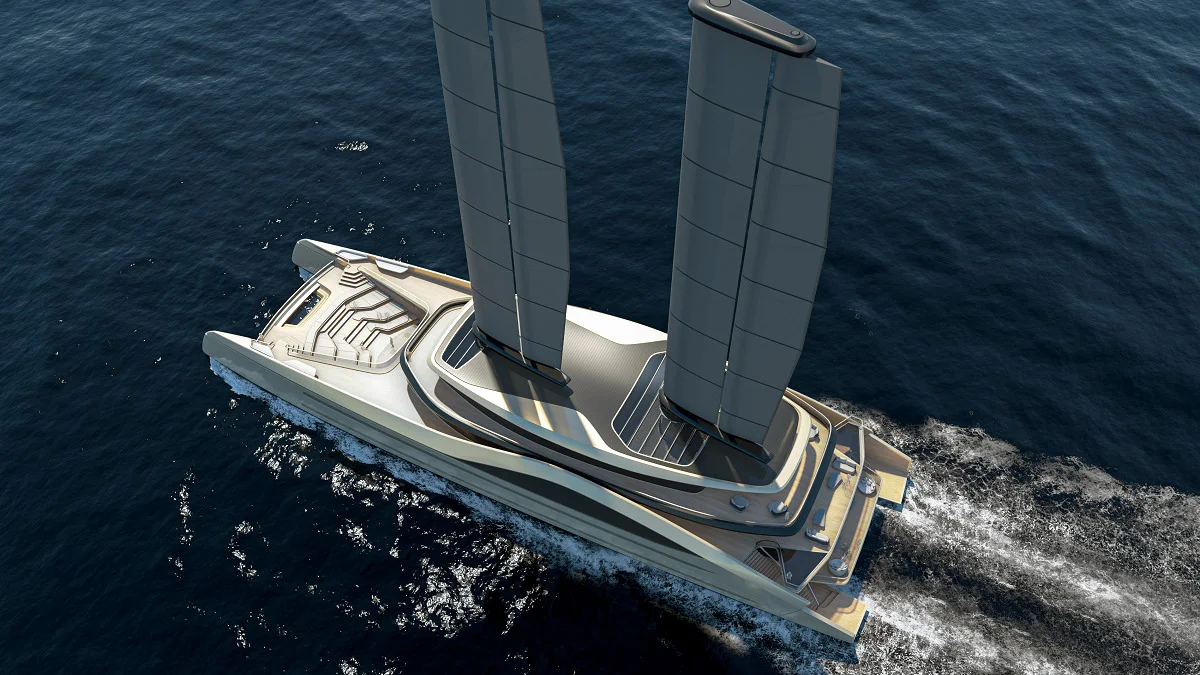
The key highlight of the super catamaran with a length of 76 m and a beam of 22 m is two OceanWings wingsails. The developer, French VPLP Design, has alredy tried and tested this system in the America’s Cup (when the wing-sailed trimaran USA 17 won the 2010 regatta) and the 121-metre cargo vessel Canopée.
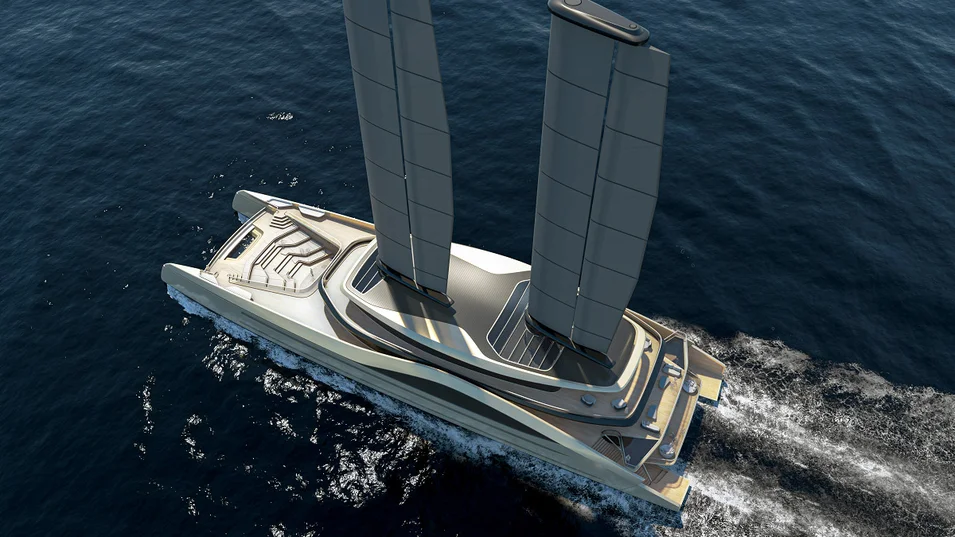
Instead of a traditional sail rig requiring the coordinated effort of a large professional crew, the rigid OceanWings that resemble aircraft wings are operated with minimal effort. All processes are computerised, and the system automatically adjusts the angle of attack to the wind..
In 17 knots of wind, the Tyrena can reach a speed of 12 knots without using any fossil fuel. With hybrid propulsion, when OceanWings work together with the engines, the catamaran saves up to 40% of fuel, while the hotel load is covered by the solar panels.
The vessel’s self-sufficiency will be impressive, too: at a speed of 12 knots the provisional range is a staggering 23,400 nautical miles, which is enough for circling the globe along the equator.
The choice of aluminium for the hulls will reduce the weight, while the hulls’ slender shape decreases the drag. The catamaran’s design enhances comfort without any additional stabilisation systems.
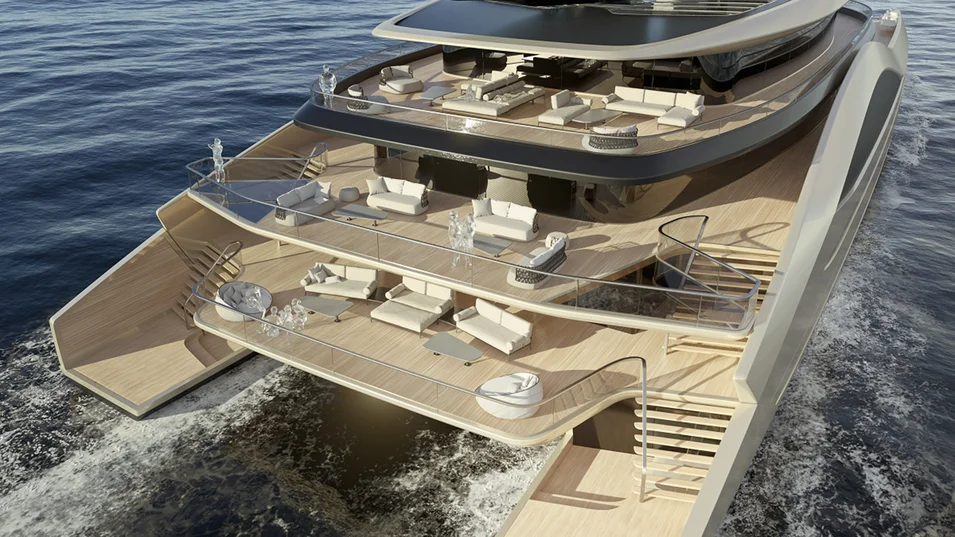
The Tyrena’s aesthetics, ergonomics and style were entrusted to Italian Micheletti & Partners. Thanks to the multihull architecture, the catamaran’s living and deck spaces are comparable to those of a 130-metre monohull motor yacht.
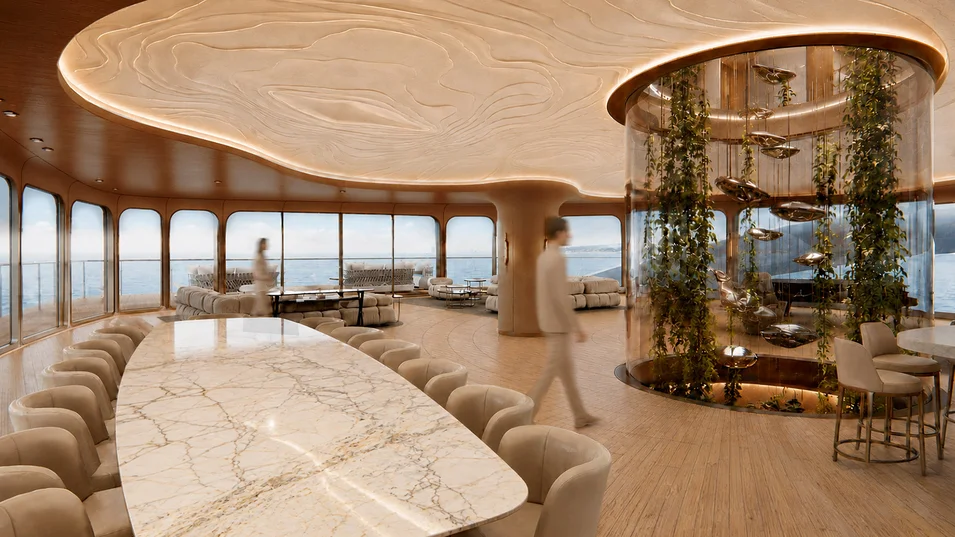
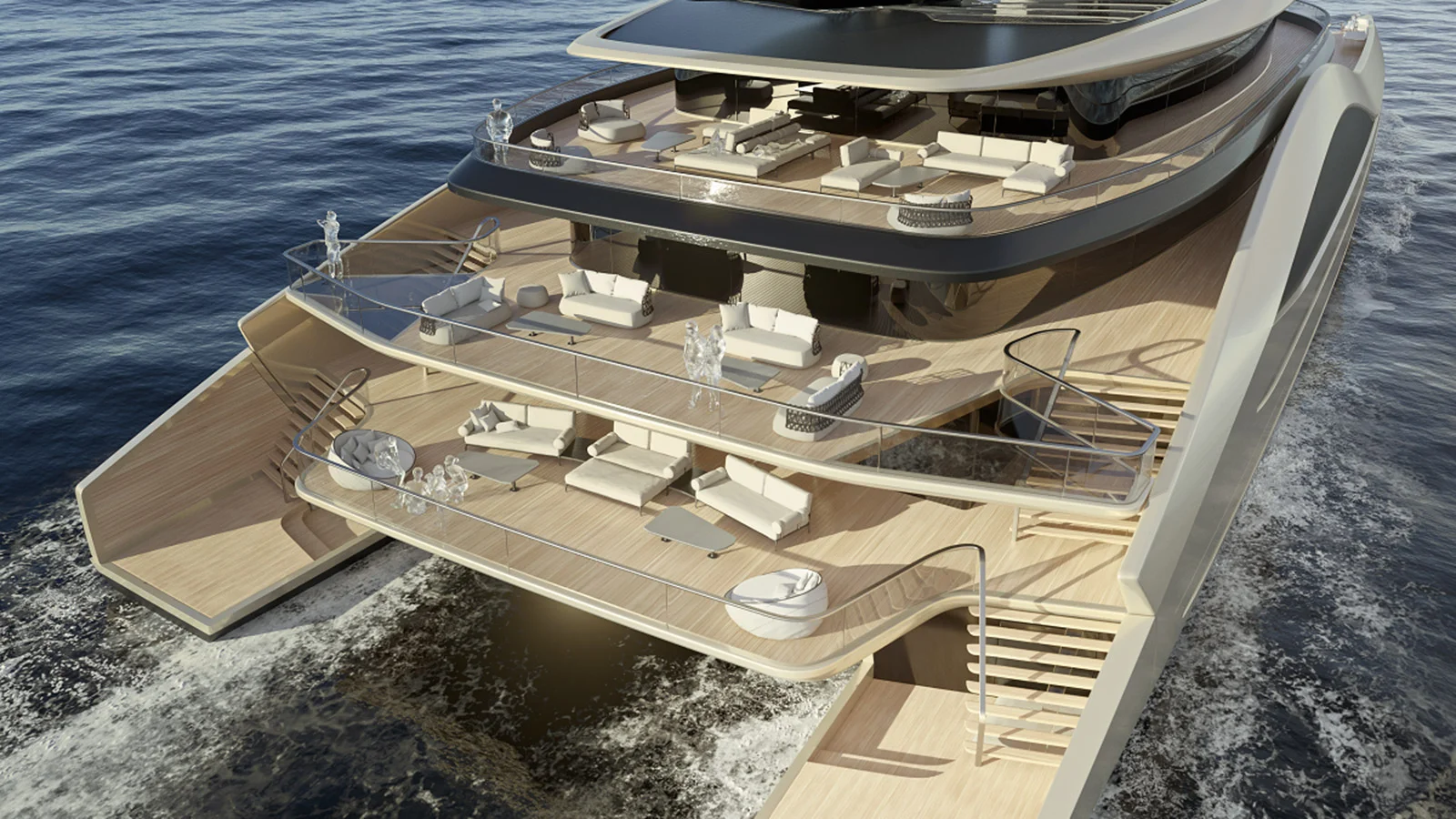
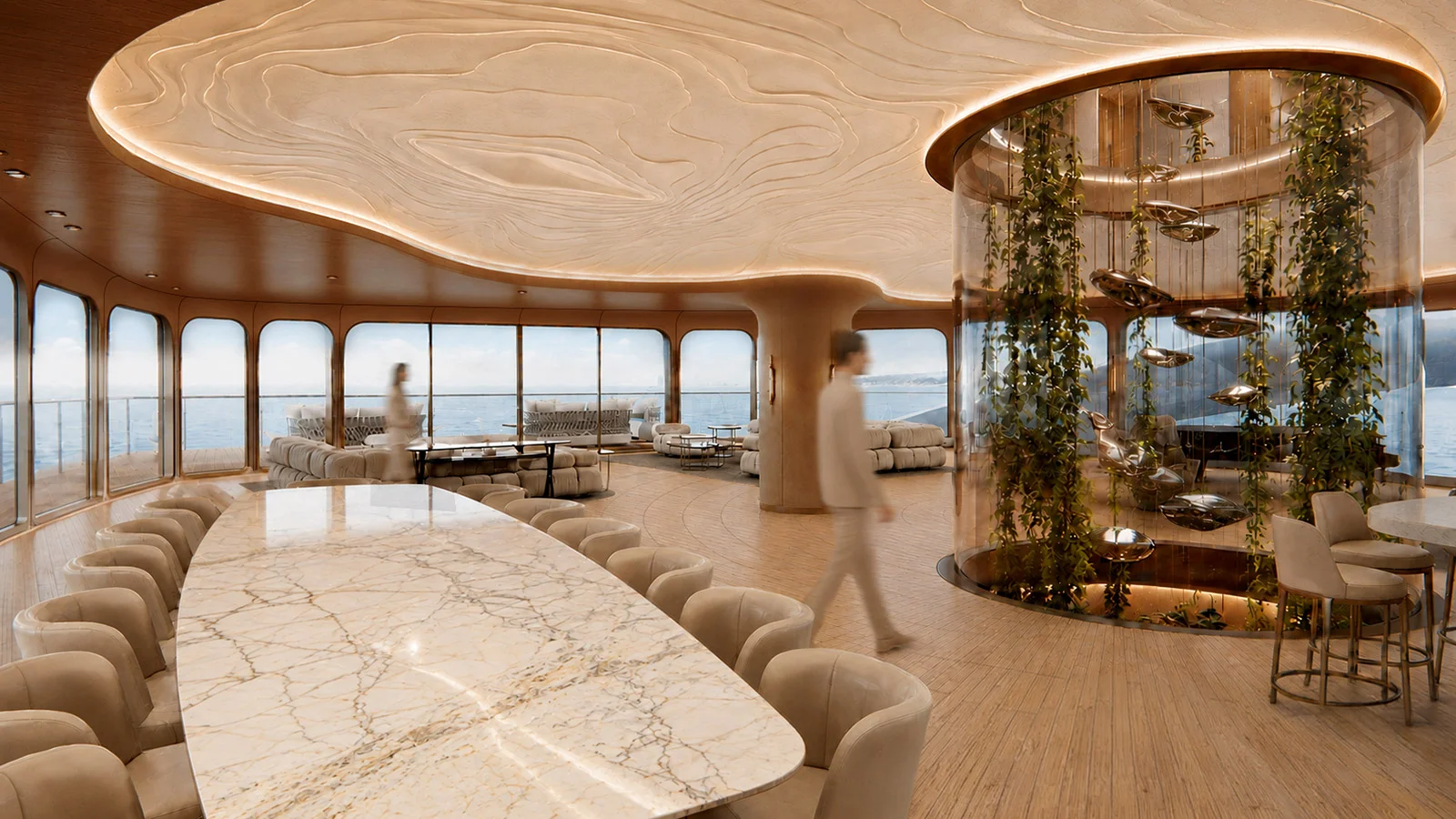
The designers drew inspiration from such classic Mediterranean architectural forms as the Roman atrium, the Greek peristyle and the Italian “masseria” as prototypes for cascading terraces, shaded patios and open belvederes overlooking the sea. One of the interior’s highlights is the “vertical garden”: a glass cylinder housing different plants and spanning all the decks.
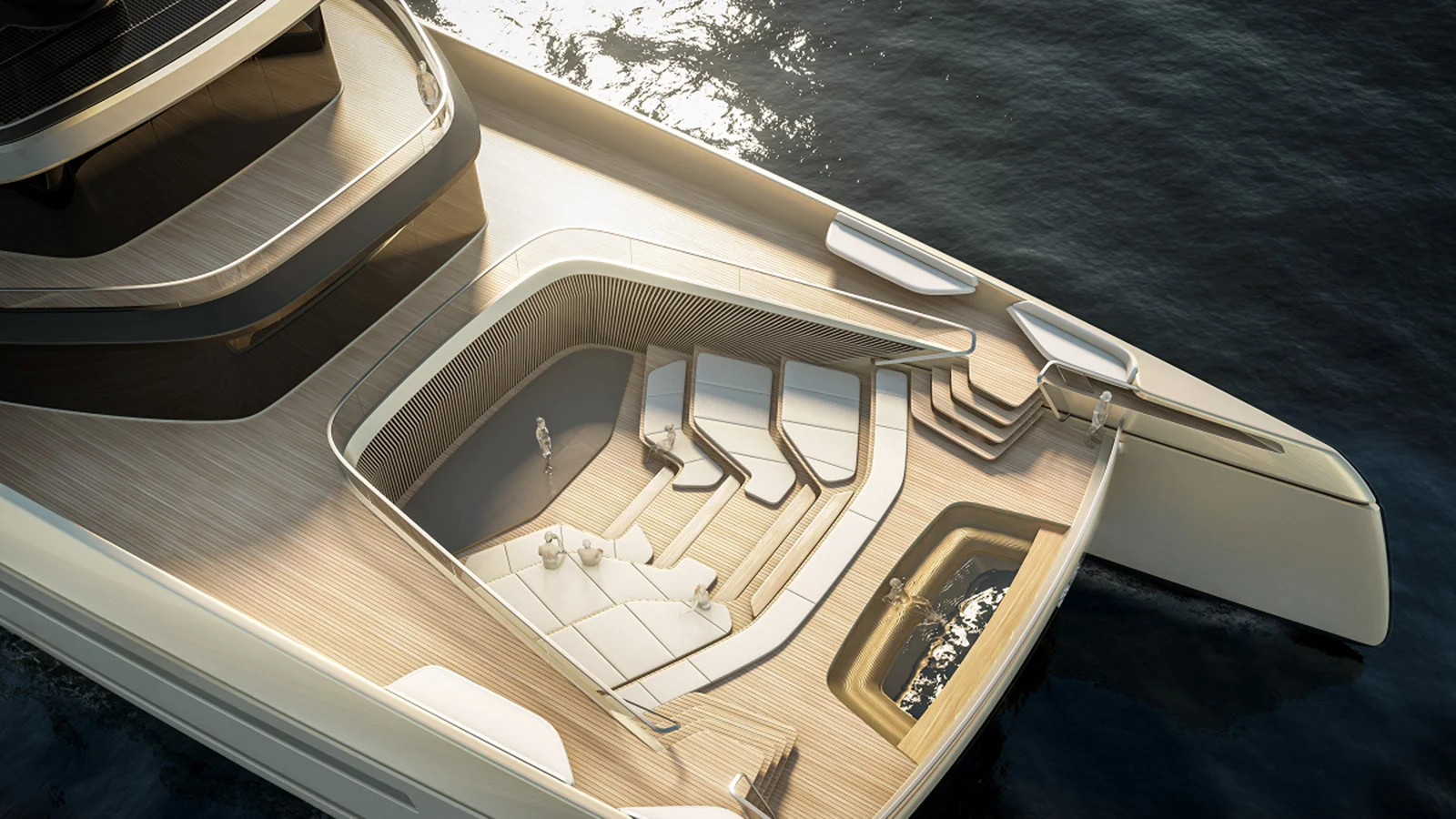
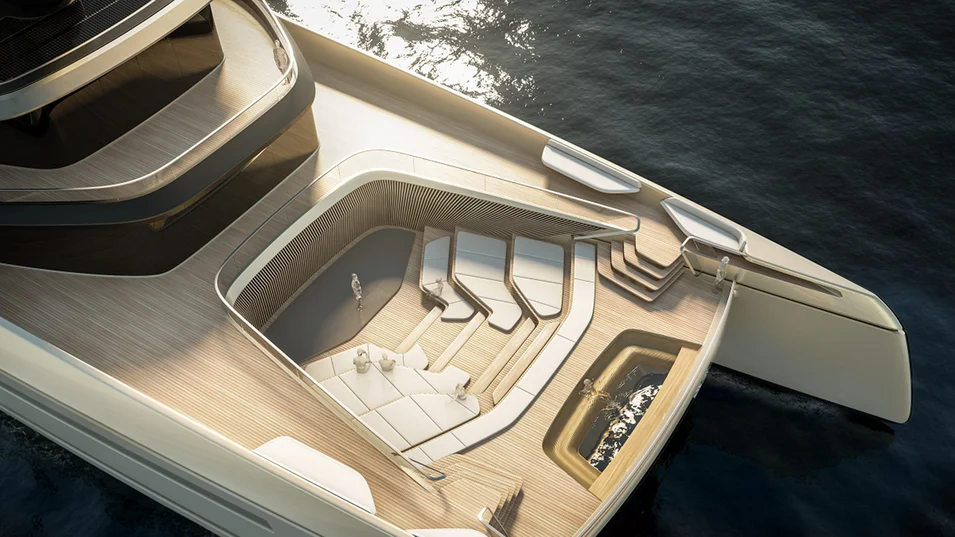
Among other innovative solutions one can mention a mobile aft platform that unites the hulls into a single beach club, a full-fledged amphitheatre for cultural events forward and the "fish gills" – movable flaps integrated into the coachroof for passive ventilation.
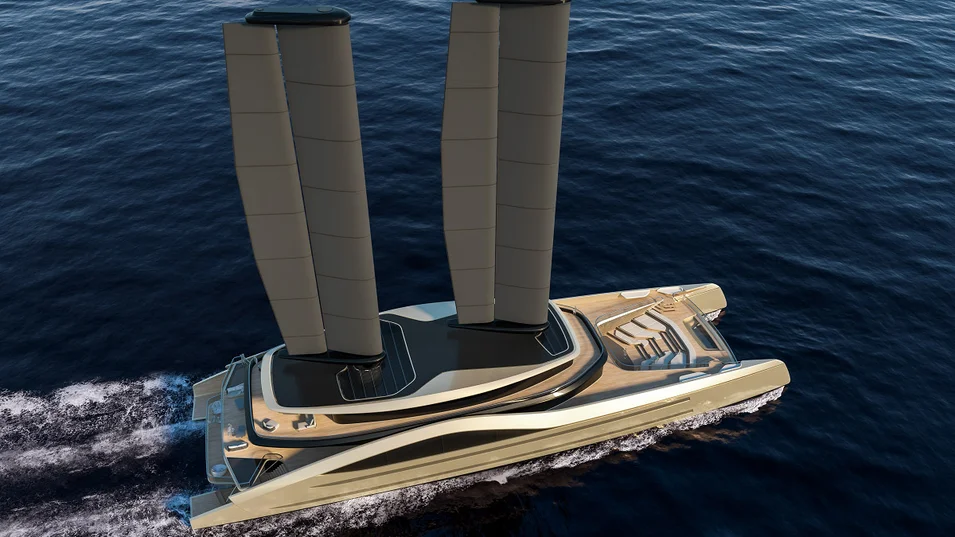
The designers position the Tyrena not as another concept, but an alternative to traditional yachts. The project’s technological foundation is ready, and the OceanWings have already proven their reliability in practice. If VPLP finds a visionary client, the Tyrena has every chance of becoming the flagship of the "green revolution" in the megayacht sector, demonstrating that sustainability and luxury can coexist.
You have successfully subscribed to our newsletter